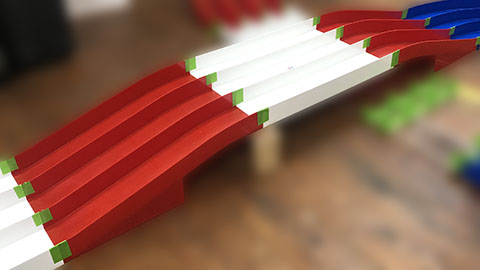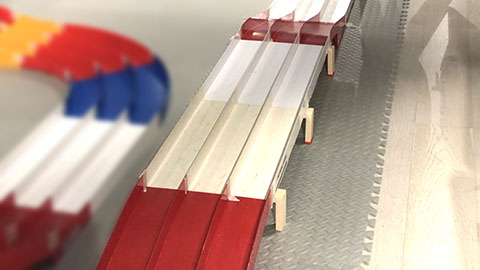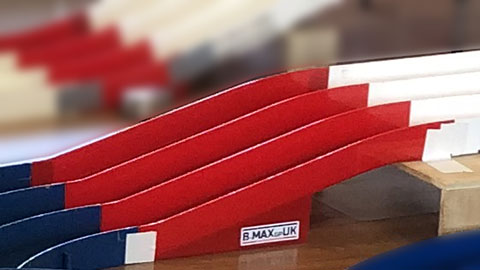
Mini 4WD Brake and Jump Simulator

Version beta v1.2 - Public Beta Trial. Last updated 25 May 2026.

This is a Mini 4WD simulator where you can experiment with different motor, brakes and tyres combinations and see how the car might behave going over an obstacle such as a slope jump section before finalising your setup. It will show you the height of the jump, the landing point and the rebound height. The parameters are based on scientific experiments we did in the past. You can also enter your own. Hit the green button when you are ready to run the simulation.

In the simulation, you can pause and continue, adjust the playback speed (default to 1/4 of real-time speed) and zoom into a specific time. Hope you find this useful.

Assumptions: for rebound simulation, it assumes the tyres touch the ground first, not the bumper.

Limitations: the simulator does not simulate motor torque, hence the car speed is near constant after braking. The simulator does not simulate air friction.

What's new in this release: 3 more slope jump obstacles, 5 new obstacles made out of 20 degree and 160 degree bank-approach sections and 40 and 60 degree bank. Automatically calculate brake engagement distance based on brake pad height and position. More guidance with pictures. Improved graphics. We now have a full Mini 4WD car from our logo instead of two little wheels.

Mini4Science is not responsible for the accuracy, reliability of the information provided on our website. Use of this website is at your own risk, and Mini4Science is not liable for any damages arising from its use.

Copyright Mini4Science 2026.

1. About the track
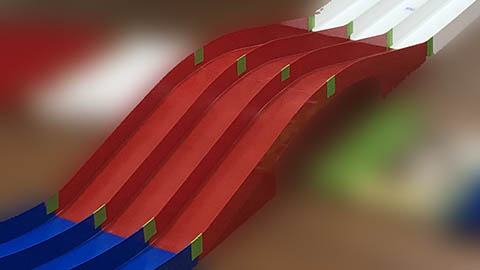
Please select an obstacle type
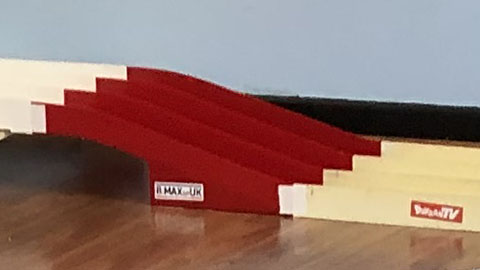
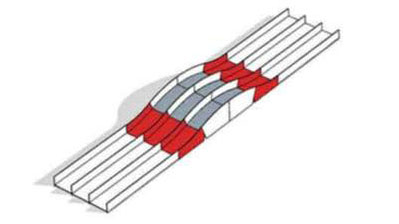
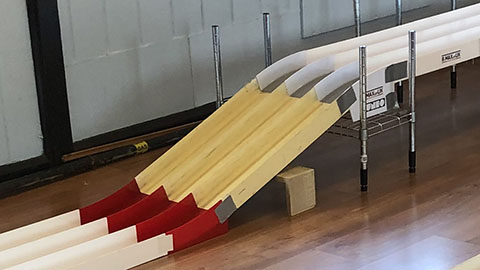
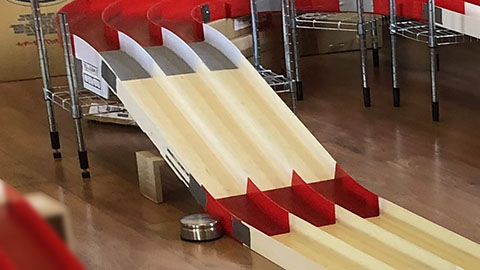
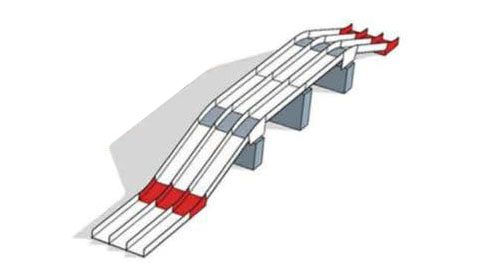
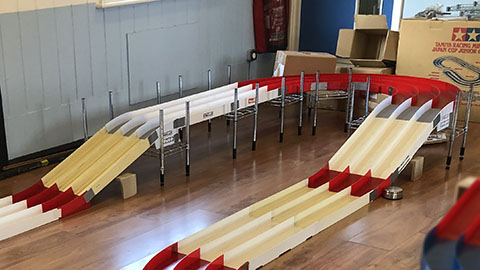
Picture of a Tamiya Mini 4WD 3 lanes junior circuit slope section Picture of a Tamiya Mini 4WD 3 lanes junior circuit single table top obstacle Picture of a Tamiya Mini 4WD 3 lanes junior circuit single table top obstacle Picture of a Tamiya Mini 4WD 3 lanes junior circuit triple table top obstacle Picture of a Tamiya Mini 4WD 3 lanes junior circuit slope up obstacle Picture of a Tamiya Mini 4WD 3 lanes junior circuit slope down obstacle Picture of a Tamiya Mini 4WD 3 lanes junior circuit 20/160 degree bank slope jump Picture of a Tamiya Mini 4WD 3 lanes junior circuit 20/160 degree bank slope up with a straight Picture of a Tamiya Mini 4WD 3 lanes junior circuit 20/160 degree bank slope down with a straight Picture of a Tamiya Mini 4WD 3 lanes junior circuit double table top with 20/160 degree bank and a straight Picture of a Tamiya Mini 4WD 3 lanes junior circuit 20/160 degree bank B Max GP UK 2026 set Picture of a Tamiya Mini 4WD 3 lanes junior circuit 40 degree bank Picture of a Tamiya Mini 4WD 3 lanes junior circuit 60 degree bank Unknown picture

2. Car speed

What is the speed of the car before entering the obstacle?
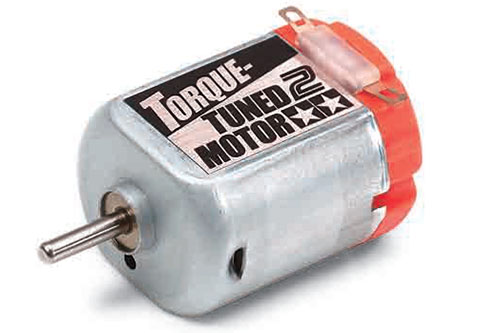
Select a motor. (RPM value will be based on spec maximum RPM)
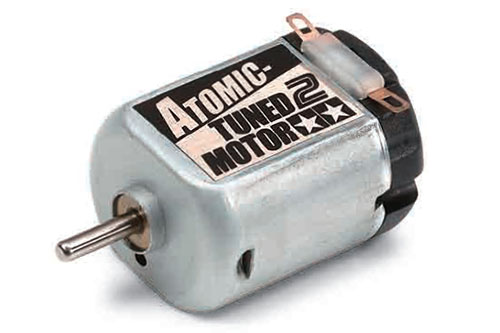
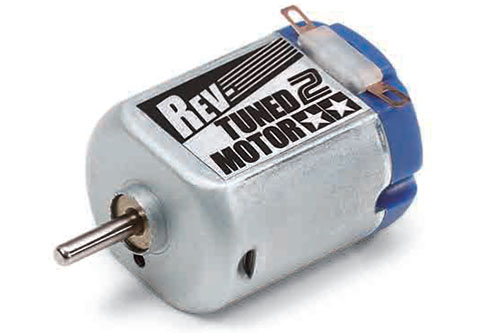
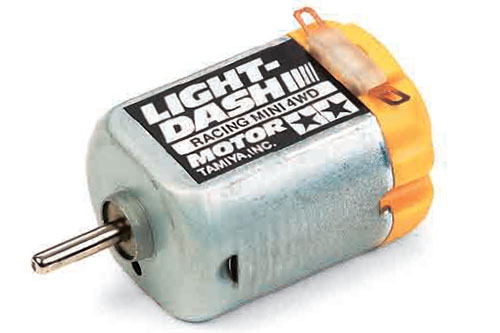
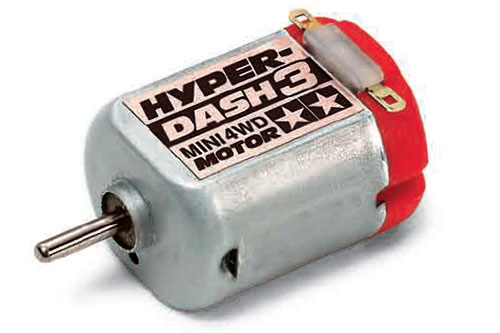
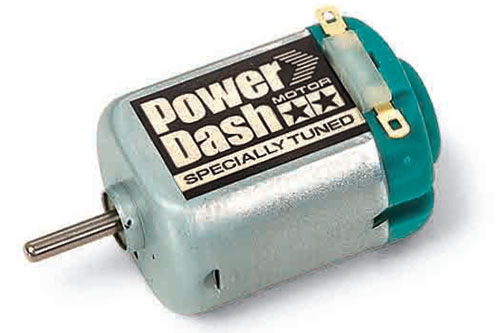
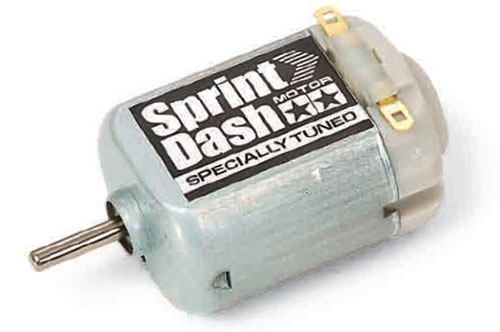
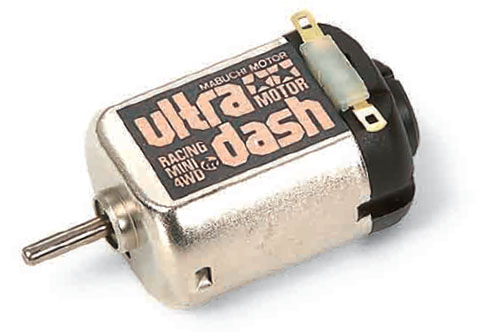
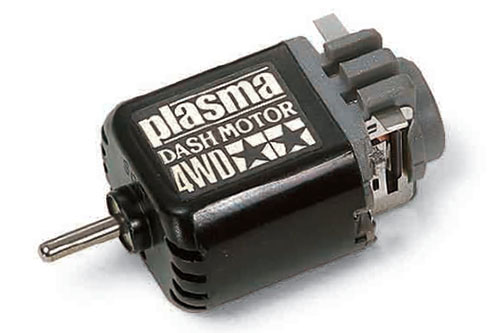
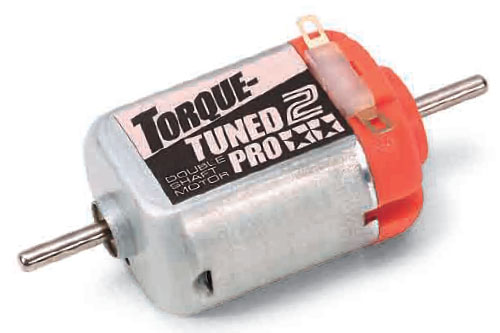
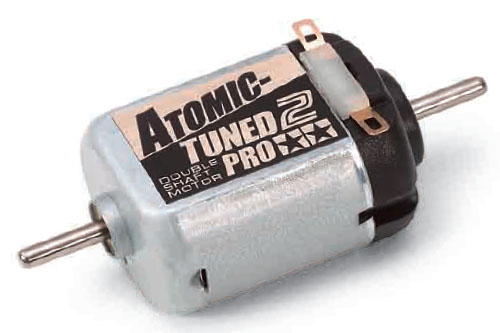
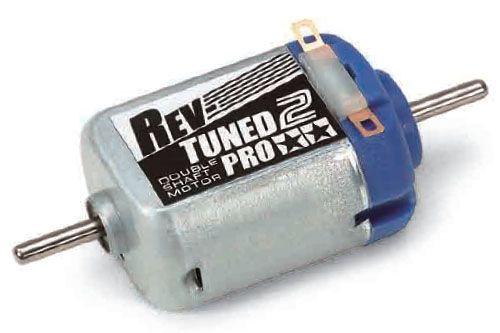
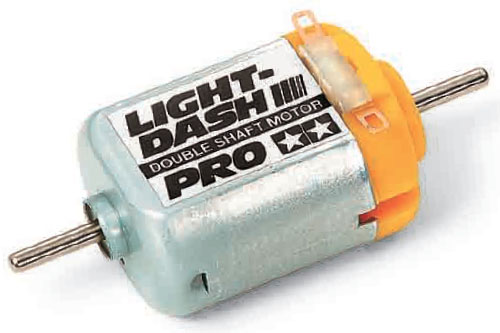
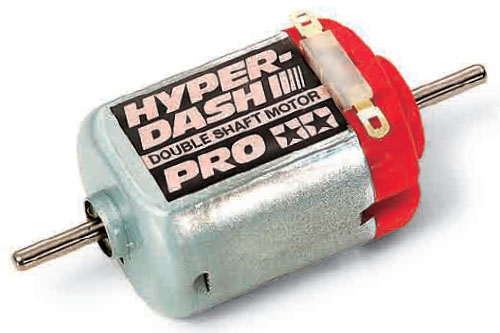
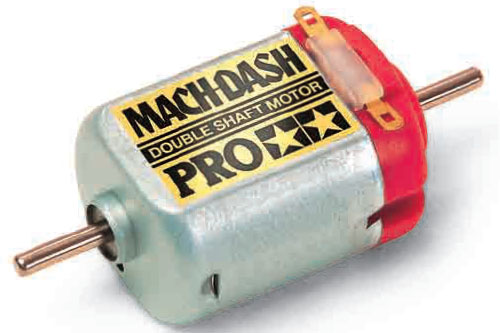
Picture of a Tamiya Mini 4WD Torque-Tuned 2 motor Picture of a Tamiya Mini 4WD Atomic-Tuned 2 motor Picture of a Tamiya Mini 4WD Rev-Tuned 2 motor Picture of a Tamiya Mini 4WD Light Dash motor Picture of a Tamiya Mini 4WD Hyper Dash 3 motor Picture of a Tamiya Mini 4WD Power-Dash motor Picture of a Tamiya Mini 4WD Sprint-Dash motor Picture of a Tamiya Mini 4WD Ultra-Dash motor Picture of a Tamiya Mini 4WD Plasma-Dash motor Picture of a Tamiya Mini 4WD Torque-Tuned 2 Pro motor Picture of a Tamiya Mini 4WD Atomic-Tuned 2 Pro motor Picture of a Tamiya Mini 4WD Rev-Tuned 2 Pro motor Picture of a Tamiya Mini 4WD Light-Dash Pro motor Picture of a Tamiya Mini 4WD Hyper-Dash Pro motor Picture of a Tamiya Mini 4WD Mach-Dash Pro motor

Data source: Which is the best Tamiya Mini 4WD PRO motor?

Select a motor or customise your own
abc
Enter motor rpm value e.g 19000
abc
Gear ratio e.g. 3.5, 4.0 etc...
abc
Wheel diameter e.g. 2.4, 2.6, 3.2
abc
The speed of the motor will reduce underload e.g. 20%

Caution: Don't forget to use a value that represents the car speed under load i.e. on the track. For example, apply 20% reduction from speed checker reading.

abc
Change the value as you see fit
abc
Change the value as you see fit

3. Brake

Select your brakes setup. (Data source: What is the difference amongst the Tamiya Mini 4WD sponge brake pads?)

3a. Front brake
Please select a material
Picture of a Tamiya Mini 4WD Green Sponge Picture of a Tamiya Mini 4WD Blue Sponge Picture of a Tamiya Mini 4WD White Sponge Picture of a Tamiya Mini 4WD Red Sponge Picture of a Tamiya Mini 4WD Grey Sponge Picture of a Tamiya Mini 4WD Grey Sponge
abc
Front brake pad properties

Please measure the size of your brake pad and enter the measurements in mm here. It will calculate the size for you. The friction co-efficient per mm2 has been provided to you but feel free to change it. It will calculate the friction co-efficient of your selected brake pad.

Measuring brake pad size
abc
abc
abc

3b. Rear brake

Please select a material
Picture of a Tamiya Mini 4WD Green Sponge Picture of a Tamiya Mini 4WD Blue Sponge Picture of a Tamiya Mini 4WD White Sponge Picture of a Tamiya Mini 4WD Red Sponge Picture of a Tamiya Mini 4WD Grey Sponge Picture of a Tamiya Mini 4WD Grey Sponge
abc
Rear brake pad properties

Please measure the size of your brake pad and enter the measurements in mm here. It will calculate the size for you. The friction co-efficient per mm2 has been provided to you but feel free to change it. It will calculate the friction co-efficient of your selected brake pad.

Measuring brake pad size
abc
abc
abc

3c. Brake contact

Identify how long the brakes make contact to track surface.
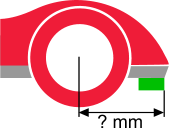
abc
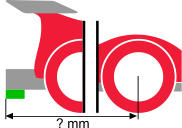
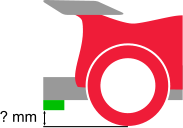
Enter the horizontal distance between the tip of your front brake to the centre of the front wheel in mm
abc
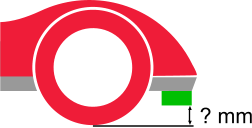
Enter the height of the tip of your front brake to the ground in mm
abc
Enter the horizontal distance between the tip of your rear brake to the centre of the front wheel in mm
abc
Enter the height of the tip of your rear brake to the ground in mm
abc
What is the distance your brakes make contact with the track surface?

3d. Track conditions

Please select the number of straights after the obstacle. If the car lands in the red zone, it is likely to come off the track.
How good is the track surface? (0% means totally slippery, 100% means perfect)

4. Wheels and tyres

This determines how high the car bounce upon landing. (Data source: What is the difference amongst the Tamiya Mini 4WD small diameter Low Profile Tyres?)
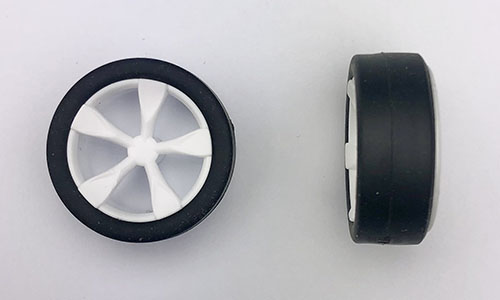
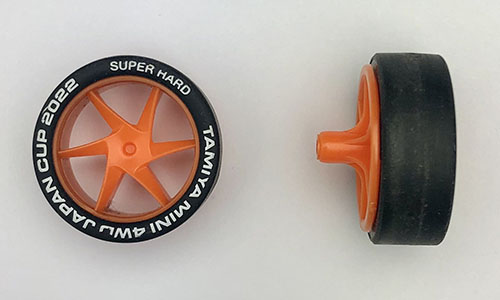
Please select tyre type
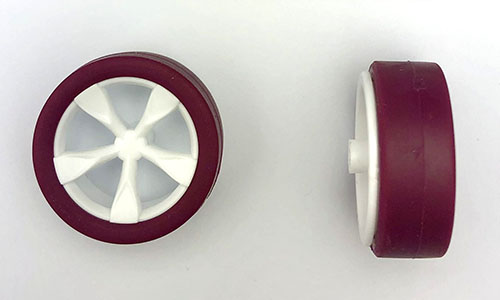
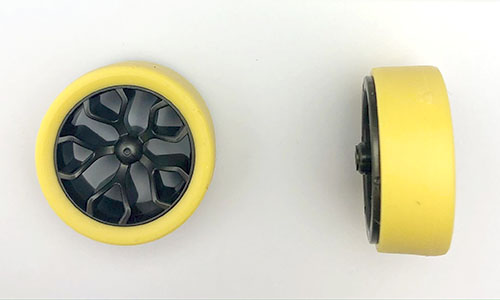
Picture of a Tamiya Mini 4WD Low Profile standard (Hard) Picture of a Tamiya Mini 4WD Low Profile Super Hard 2022 Picture of a Tamiya Mini 4WD Low Profile Low Friction Maroon Picture of a Tamiya Mini 4WD Low Profile Offset Hard Yellow
abc
(Coefficient of restitution)
How good is the mass dampling effect? (0% means normal, 100% means zero bounce)
If you can see this, your browser does not support Canvas